• Bangalore Phone
  • Email
  • Pune and Chennai Phone
  • Email
  • Internaltional Enquiry Phone
  • Email

Anodizing

INTRODUCTION - ALUMINIUM ANODISING

Aluminium anodising is an electrochemical process that forms a protective oxide layer on the surface of aluminium products. For industries looking to enhance both durability and aesthetics, partnering with an experienced aluminium anodising manufacturer in India ensures high-quality surface treatments that meet global standards. The process involves placing the aluminium part in a bath of electrolyte solution and passing an electric current through it.

Anodizing
Anodizing
Anodizing

PROCESS OF ALUMINIUM ANODISING AT JM ALUMINIUM

As a premier aluminium anodising manufacturer in India, we provide a range of finishes from natural, glossy, matt, brush finish, bright finish with coating thicknesses up to 25 microns and colors ranging from silver, bronze, champagne, black, Rose Gold, Sapphire Grey, and SS Finish. Here is the anodising process that JM Aluminium follows:

Preparation

PREPARATION

The first step in the commercial aluminium anodising process is preparing the aluminium surface. JM Aluminium ensures the surface is clean and free from oils or dirt that may affect the Anodising process, which is done by cleaning the aluminium using a degreasing solution, followed by a thorough rinse.

Anodising

ANODISING

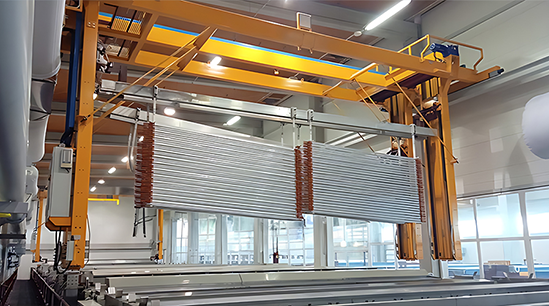
After the preparation stage, the structural or custom-extruded anodised aluminium sections are immersed in an electrolyte solution, and an electric current is passed through it to cause an oxidation reaction. This reaction creates the protective oxide layer on the surface of the metal. The thickness and color of the oxide layer can be controlled by adjusting the time and voltage of the Anodising process.

Sealing

SEALING

Sealing the oxide layer is done by immersing the treated aluminium in a sealing solution, which helps to close any open pores in the oxide layer. Whether finishing a sleek black anodised aluminium profile or a vibrant colored piece, this step is crucial for improving the aluminium’s corrosion resistance and making it more durable.

Quality Control

QUALITY CONTROL

JM Aluminium places great emphasis on quality control throughout the production cycle. We regularly test the thickness and hardness of the oxide layer to ensure that it meets the required standards, whether verifying the uniformity of a matte appearance or a highly reflective bright anodised aluminium surface. We also inspect the final product for defects or imperfections before it is released to the customer.

INDUSTRY APPLICATION OF ALUMINIUM ANODISING

AUTOMOTIVE INDUSTRY

The automotive industry is a significant consumer of anodised aluminium sections. The Anodising process enhances the surface properties of aluminium parts such as wheels, engine blocks, and body panels. These parts are often exposed to harsh weather conditions, chemicals, and other environmental factors, which can cause corrosion and degradation. Anodising these parts increases their resistance to corrosion, wear, and tear and improves their appearance.

CONSTRUCTION INDUSTRY

Aluminium Anodising has a significant application in the construction industry, where it is used to enhance the properties of aluminium products used in building facades, windows, and doors. Anodized aluminium provides these products with improved durability, scratch resistance, and weather resistance. Additionally, the anodized layer can be dyed in various colors, providing architects and builders with various design options. 

AEROSPACE INDUSTRY

The aerospace industry also uses anodised aluminium sections in manufacturing aircraft parts. The anodized layer on the aluminium parts enhances their durability and corrosion resistance, making them suitable for use in harsh environments such as high-altitude regions and saltwater exposure. Anodising is also used to create identification marks and codes on aircraft parts. 

CONSUMER ELECTRONICS INDUSTRY

The consumer electronics industry uses anodized aluminium to manufacture products such as smartphones, laptops, and tablets. Anodising these products enhances their appearance and increases durability and resistance to wear and tear.  

BENEFITS OF ALUMINIUM ANODISING

CORROSION RESISTANCE

Bright anodised aluminium provides excellent corrosion resistance to aluminium products. The anodised oxide layer acts as a protective barrier that prevents the aluminium from contacting corrosive substances such as saltwater, acid rain, and other chemicals. This makes anodised aluminium ideal for harsh environments, including marine and industrial settings.

DURABILITY

Anodized aluminium products are highly durable and resistant to wear and tear. The anodized oxide layer is hard, scratch-resistant, and can withstand extreme temperatures, making it suitable for use in high-stress applications such as aerospace and automotive industries. 

AESTHETIC APPEAL

The commercial aluminium anodising process enhances the aesthetic appeal of aluminium products by adding color and texture to the surface. anodised aluminium is available in various colors, from natural metallic shades to vibrant hues, allowing for customisation and branding opportunities.

EASY MAINTENANCE

Anodized aluminum products are easy to maintain and require minimal upkeep. The oxide layer is resistant to staining and can be easily cleaned with soap and water, making it ideal for interior and exterior applications. 

IMPROVED ADHESION

Products coated in a high-luster glossy anodised aluminium or deep-toned black anodised aluminium have improved adhesion properties, making them suitable for bonding and coating applications. The anodised oxide layer creates a surface more receptive to adhesives, paint, and other coatings, improving their bond strength and durability.

ENVIRONMENTAL FRIENDLINESS

The anodised aluminium is an environmentally friendly process that produces no harmful by-products or emissions. The process uses non-toxic materials and is energy efficient, making it a sustainable option for surface treatment. 

SERVICES OFFERED BY JM ALUMINIUM

At JM Aluminium, we offer a range of Anodising services to meet the needs of our customers. As a leading aluminium anodising manufacturer in India, our specialised services include:

HARD COAT ANODISING

Hard coat Anodising is a specialized process that creates an extremely durable and wear-resistant layer on the surface of the aluminium. The process involves using a specially formulated electrolyte solution and applying a higher current density to the metal. The resulting anodized layer is much thicker and harder than standard Anodising, providing enhanced protection against abrasion and wear. 

COLOR ANODISING

Color Anodising is a process that adds color to the surface of the aluminium. The process can create a range of vibrant and long-lasting finishes, from metallic and pastel hues to bold primary colors. At JM Aluminium, we offer a wide range of color options, allowing our customers to create a customized natural anodised finish that matches their branding or design preferences. 

DECORATIVE ANODISING

Decorative bright anodised aluminium is a specialised process that creates a range of decorative finishes on the surface of the aluminium. The process involves using a combination of masking, etching, and coloring techniques to create natural anodised finish patterns and designs on the surface of the metal. Decorative anodising is also perfect for applying a smooth satin anodised finish ideal for architectural and decorative applications, including interior and exterior building cladding, signage, and branding.

FAQS

The two most common types of aluminium anodising are sulfuric acid Anodising and hard Anodising. Sulfuric acid Anodising is the most common and is used for general-purpose Anodising. Hard Anodising is used when a more wear-resistant surface is required.

Aluminium Anodising produces a range of colors depending on the thickness of the oxide layer. The most common colors are clear, bronze, black, and gold. Other colors are also available depending on the desired thickness of the oxide layer and the type of dye used. 

Aluminium Anodising is widely used in the automotive, aerospace, construction, and consumer goods industries. It is also commonly used in architectural applications such as windows, doors, and cladding. 

Aluminium anodising is generally considered to be an environmentally friendly process. It does not produce harmful by-products, and the anodised layer is non-toxic and biocompatible. The process also reduces the need for frequent maintenance and replacement of aluminium products, reducing waste and energy consumption. Opting for a durable bright anodised aluminium coating further supports these long-term sustainability benefits.

What is the difference between painting and Anodising aluminum? 

Contact Us

Contact Form

Download Pdf

PDF form